A Conversation on Our New AI Coach for Math Tutors
“Opening the aperture on who can deliver an excellent math lesson” is an idea long held by CitySchools Collaborative Executive Director Cat Peretti—that most anyone can be an effective tutor with the right resources, training, and coaching. Since 2020, we’ve focused on expanding access to high-impact tutoring and strengthening the systems that support it. Now, with support from NewSchools Venture Fund and the Global Technology Industry Association, we are building an AI tool—Sophia AI—to strengthen math instruction and accelerate student growth.
Susannah Tsien, our Chief Program Officer and former math coach, has led the development of Sophia AI and shaped it to supercharge tutors, not replace them. After completing its first pilot in partnership with EduTutorVA and Raising a Village Foundation, she’s now looking at how tutors actually used and relied on the tool. As Susannah explained, Sophia AI is designed to sit alongside tutors as they are preparing for, teaching, and reflecting on a lesson. Early insights are showing what she heard time and again: tutors “just feel so much better” going into tutoring sessions with Sophia AI.
Can you talk about where Sophia AI came from? We wanted to be really thoughtful about how AI fits into the systems and interventions that are already in place, without replacing what we know is the most important factor in schools—the humans. That grounding was really important to us from the start. At the same time, this came up pretty organically. We had built a math curriculum designed to be really turnkey for tutors, especially those who aren’t trained educators or math majors. But we kept hearing from tutors and providers that they still needed a lot of coaching and support to actually implement those lessons well.
So the question became: how do we give tutors that kind of support in the moment? AI felt like a natural way to do that—something that could sit alongside a tutor as a kind of co-pilot and help them be more responsive, more flexible, and more student-centered while they’re teaching.
So when you tell people CitySchools Collaborative has built an AI tool for classrooms, what’s the biggest misconception you run into? I think when people hear “AI,” they immediately jump to the idea that it’s replacing humans. That’s not what this is. Sophia is intentionally designed to support and strengthen the tutor, not replace them. Tutoring works because of the human relationship—the connection between the tutor and the student. That doesn’t change. What Sophia does is help the tutor be more prepared, more responsive, and more confident in those moments. It’s about pairing strong human relationships with better instructional support.
So why build a customized tool versus using an existing AI platform? A lot of people are already using tools like ChatGPT in their work, and those can be helpful. But Sophia is different because it already knows the lesson—and where students are likely to struggle. It’s not just responding to a generic prompt like, “Help me explain fractions.” It has the full context of the lesson—the script, the problems, the answer key—so it can anticipate where students are likely to struggle and give really specific guidance. For example, it might flag a particular problem as tricky and walk the tutor through how to explain it when students get stuck. That level of specificity is what makes it feel much more like a coaching tool than a general AI assistant.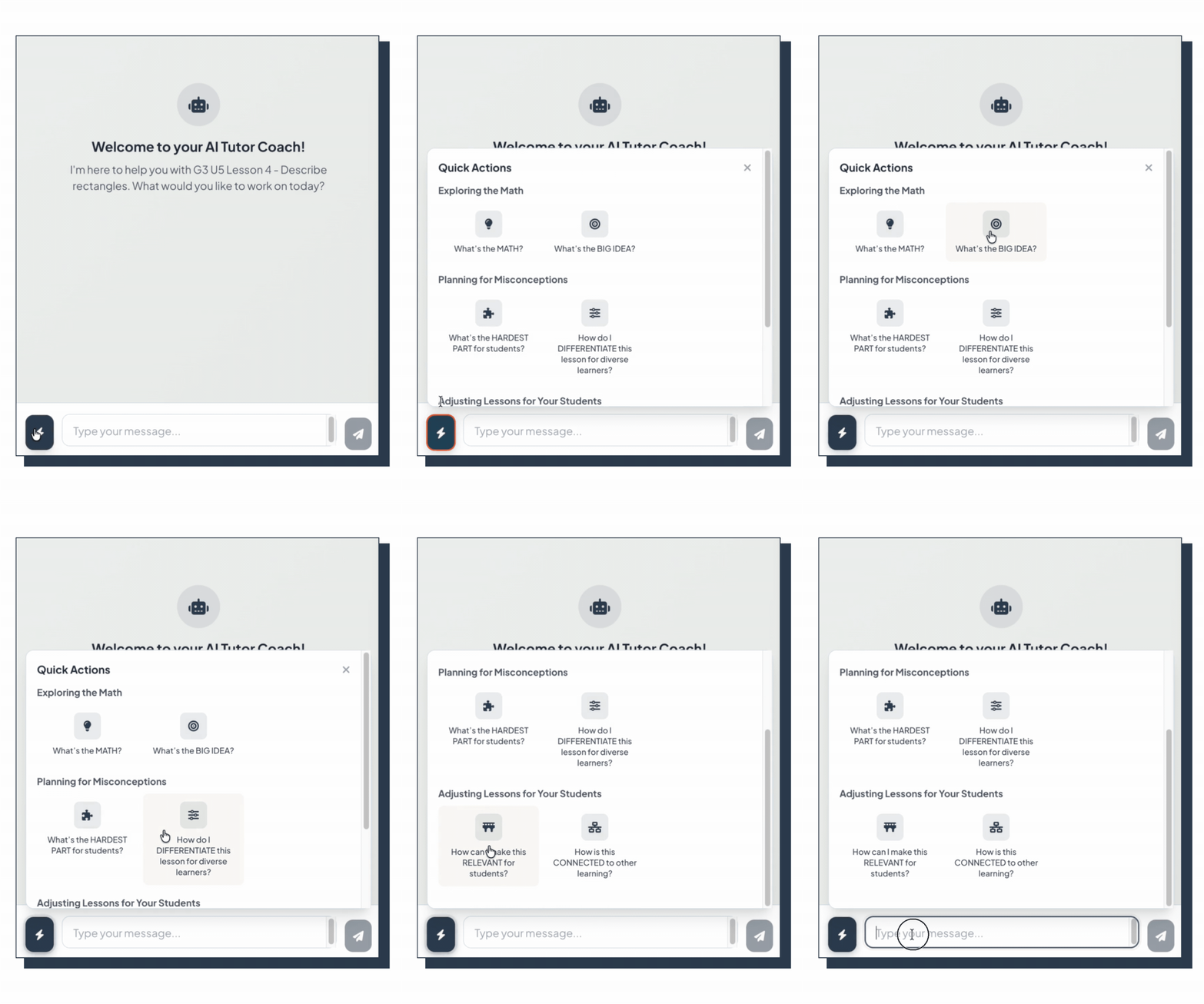
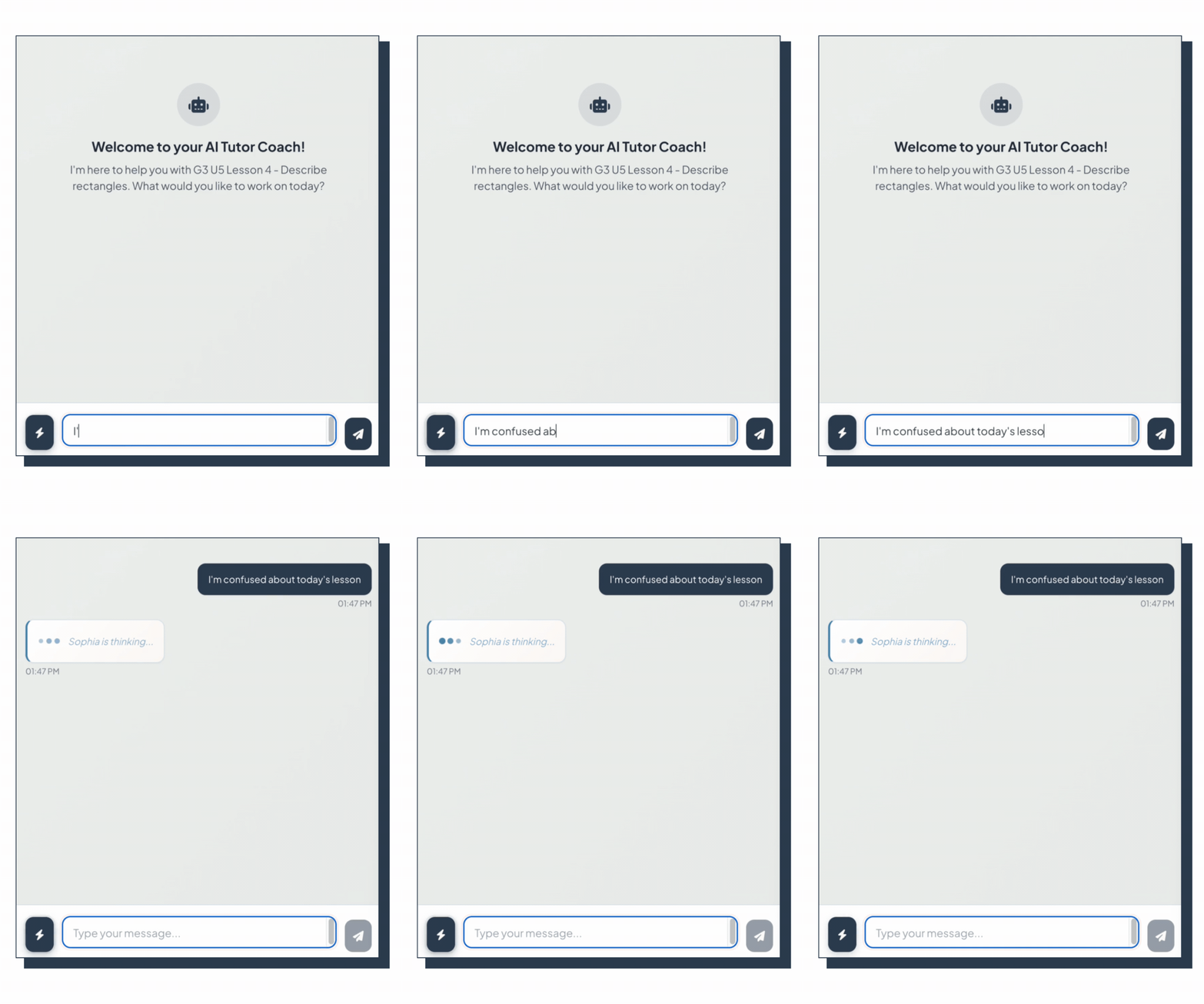
For those who haven’t seen it, what does a tutor actually see when they open Sophia AI? When a tutor opens Sophia, they start by selecting the lesson they’re teaching. They can also add individual students, so the support is grounded in who they’re actually working with. From there, they choose a mode—before the lesson, during, or after—and start interacting with the tool. One of the most helpful features is the Quick Action buttons. Tutors don’t always know what to ask, so these give them entry points like, “What’s the hardest part of this lesson?” or “How will I know if students understand?” That helps them quickly get to the kinds of insights that would normally come from an experienced coach.
Are there certain features of Sophia AI that tutors are really gravitating toward? One thing that really stood out is that tutors are getting the most value from using Sophia before they teach. We initially thought the heaviest use might be during tutoring, but what we heard consistently across both pilots is that the prep support was the most valuable. Tutors felt more confident going into sessions—they could anticipate misconceptions, think through how to explain things, and adjust their pacing ahead of time. That shift in where the value shows up has been one of our biggest learnings.
Have you had any personal surprises with Sophia AI? I think what surprised me most is that AI actually can provide high-quality coaching in this context. As a former math coach, I really believe in human-to-human coaching as the most powerful way to improve practice. That hasn’t changed. But what I’ve seen with Sophia is that, when it’s grounded in the right curriculum and used alongside a human, it can meaningfully support tutors in real time. The responses can help tutors deepen their understanding of the math, adjust how they explain things, and be more responsive to students. That’s been both surprising and reassuring as we think about how to expand access to coaching.
CitySchools Collaborative is built on partnership. Can you spotlight some of the key collaborators who have helped bring Sophia AI to life? We certainly have not and cannot do this alone. NewSchools Venture Fund believed in our idea and invested in Sophia AI to develop it into a usable prototype and support early pilots and evaluations. Sophia grew out of collaborative work across our team and partners and has been shaped directly by tutor feedback throughout its development. Our tutoring providers, EduTutorVA and Raising a Village Foundation, took an early leap with us. They’ve been instrumental in piloting the tool and providing the feedback that has helped shape what Sophia is today.
We wouldn’t be where we are without the tutors who have used—and continue to use—Sophia. They’ve shared invaluable insight into what’s working, what needs to change, and how the tool fits into real tutoring workflows. The tool is what it is today because of how directly tutors shaped it through their feedback. I have a tremendous amount of gratitude for the people who came on this ride with us and learned alongside us.
Looking ahead into the future of Sophia AI, Susannah says, “We know that implementation is really the key when we’re thinking about AI tools and how they fit into a broader landscape ecosystem of support for tutors.” CitySchools Collaborative is looking to scale intentionally through CSC’s long-standing DC partners who already use our math curriculum, exploring how the tool could support tutoring in secondary literacy, and widening the aperture on who can deliver an excellent math lesson through caregivers and parents, and opportunities to extend learning at home, at the dinner table, in the kitchen, in all the places learning continues.
Learn more about Sophia AI at cityschoolscollab.org/sophia-ai.
